
The Confederate Soldier of Greenwood Cemetery
Greenwood Cemetery in Orlando, Florida, is far more than just a resting place for the dead. Established in 1880, it is the city’s oldest cemetery and a repository of history, myth, and cultural memory. Among its oak-shad...
By Rebecca "Madam Chronicler" Ryan
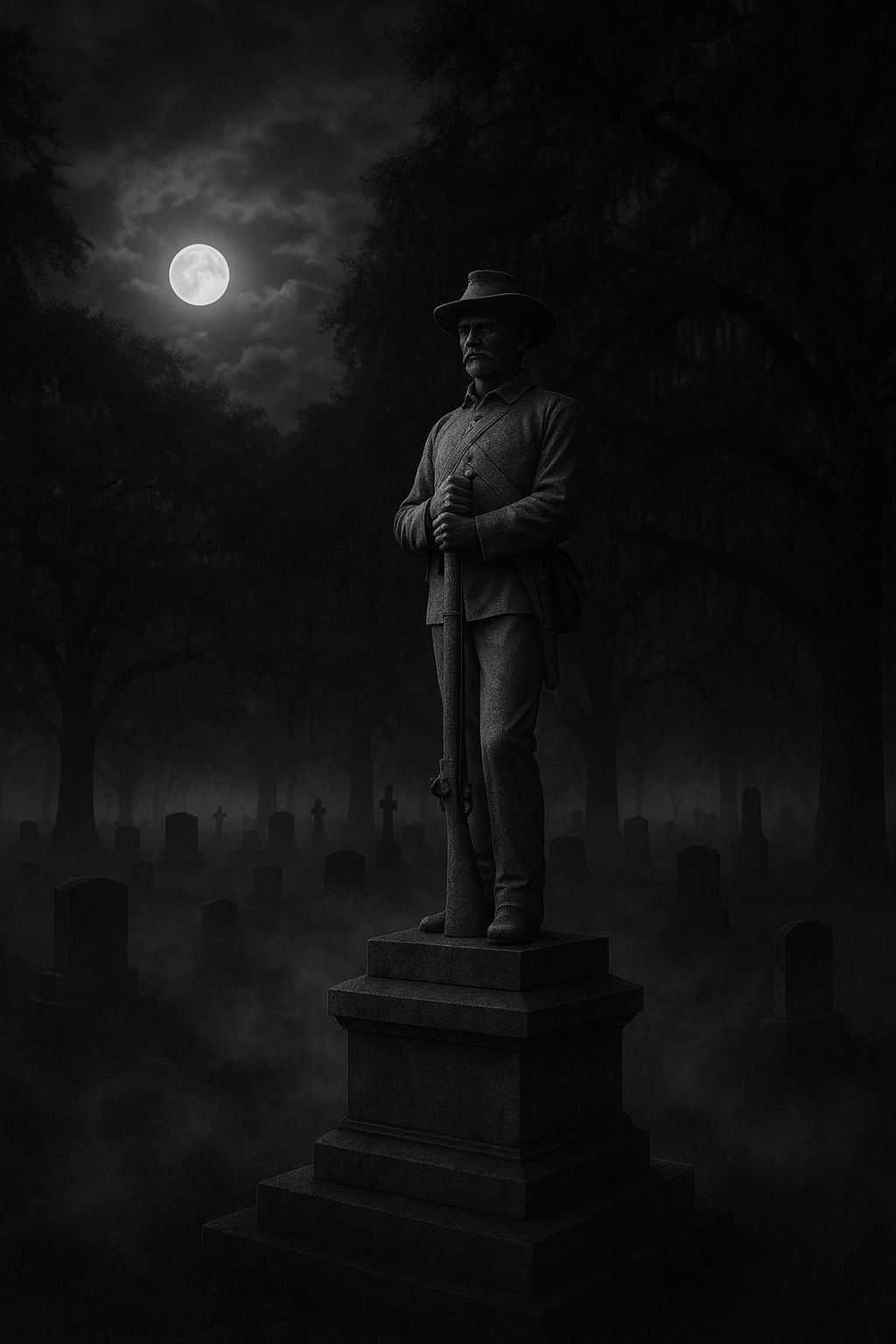
Greenwood Cemetery in Orlando, Florida, is far more than just a resting place for the dead. Established in 1880, it is the city’s oldest cemetery and a repository of history, myth, and cultural memory. Among its oak-shaded avenues, lined with moss and silence, stands a monument that has stirred both reverence and debate: the Confederate Soldier memorial. Known to some as a symbol of heritage and to others as a painful reminder of division, this statue has become one of the cemetery’s most haunting figures.
For decades, visitors have reported unusual feelings, eerie presences, and ghostly encounters near the soldier’s likeness, fueling its reputation as one of Orlando’s most spiritually charged landmarks. To understand the Confederate Soldier of Greenwood Cemetery is to peer into Florida’s complicated past, its Civil War legacy, and its ongoing struggle with memory and identity.
This blog explores the origins of the Confederate Soldier monument, the folklore surrounding it, its role in Greenwood Cemetery’s haunted reputation, and the broader conversation about Confederate memory in the South.
Greenwood Cemetery: Orlando’s Silent City
Greenwood Cemetery was founded in 1880 on 86 acres of pine land. Its layout reflects the 19th-century tradition of “garden cemeteries,” meant not only as burial grounds but also as spaces for reflection, mourning, and public history. Many of Orlando’s most prominent figures rest here: mayors, veterans of every American conflict, victims of epidemics, and everyday citizens who shaped the city’s growth.
Unlike other cemeteries hidden from public life, Greenwood remains an active cultural landmark. The cemetery offers moonlight walking tours, led by the sexton, Don Price until his death in 2020, where history, tragedy, and folklore merge into storytelling that keeps the past alive. It is within these grounds that the Confederate Soldier monument holds its silent watch.
Origins of the Confederate Soldier Monument
The monument was erected in 1911 by the United Daughters of the Confederacy (UDC), a group that sought to preserve the “memory” of the Confederacy and its soldiers in the post-Reconstruction South.
The statue depicts a lone Confederate infantryman standing at rest, rifle in hand, carved in granite. It is typical of monuments from the early 20th century, which were less about recording battlefield history and more about symbolizing Southern identity during the height of Jim Crow segregation.
For decades, the Confederate Soldier stood prominently in Orlando’s Lake Eola Park. There, it became a fixture of civic life, sometimes honored in memorial events and at other times ignored as Orlando modernized. But the winds of history shifted.
In 2017, amid national debates over Confederate monuments following the tragic events in Charlottesville, Virginia, Orlando officials decided to relocate the statue from Lake Eola to Greenwood Cemetery. This decision placed the Confederate Soldier among the graves of veterans, contextualizing it as part of the city’s funerary history rather than a civic centerpiece.
The Soldier as Symbol: Heritage or Haunting?
The Confederate Soldier represents a deeply divided set of meanings. For some descendants of Confederate veterans, it stands as a tribute to ancestors who fought and died during the Civil War. For others, it is a stark reminder of slavery, segregation, and systemic racism.
Yet in the cemetery setting, the statue has taken on an additional layer: it has become a figure of ghost stories and supernatural lore. Visitors often describe a heavy, watchful presence near the statue, as if the soldier himself were guarding the cemetery grounds.
Paranormal Accounts
- Cold Spots: Tour participants on Greenwood’s moonlight walks have reported sudden drops in temperature near the monument, even during Florida’s humid summers.
- Unexplained Shadows: Photographers claim to capture strange shadows, often shaped like a soldier, appearing beside the monument.
- Feelings of Unease: Some visitors feel a sense of dread or sorrow, especially at night, interpreting it as the spirit of a Confederate soldier unwilling to leave his post.
- Auditory Phenomena: Whispers, footsteps, and even faint drumbeats have been reported in the vicinity.
These accounts suggest the Confederate Soldier is not merely a stone carving but a focal point of collective memory, grief, and unfinished history.
The Confederate Dead of Florida
Florida played a smaller but significant role in the Civil War. As the third state to secede from the Union in 1861, it supplied troops, cattle, and salt to the Confederate cause. Battles such as the Battle of Olustee (1864) marked its military importance, though many Floridians endured the war’s devastation without ever seeing combat.
Many Confederate veterans later settled in Central Florida, and groups like the UDC ensured their sacrifices would not be forgotten. The Greenwood statue is not an isolated case: Confederate memorials exist across Florida, from Tampa’s Confederate Memorial Park to Jacksonville’s Hemming Park (now James Weldon Johnson Park).
Yet Orlando’s monument, now placed in Greenwood, is different because of its recontextualization. Removed from the city’s public square, it rests in the silence of the cemetery, surrounded by both Confederate and Union veterans, making it part of a larger story of reconciliation and remembrance.
Greenwood Cemetery and Civil War Memory
Greenwood Cemetery is home to many veterans’ graves, spanning from the Civil War to modern conflicts. Walking through its sections feels like passing through chapters of American military history.
The Confederate Soldier stands as a sentinel not just for Confederate dead but for the city’s ongoing dialogue with its past. By situating the statue in the cemetery, Orlando officials aimed to balance heritage and inclusivity, allowing the monument to remain without serving as a civic endorsement of Confederate ideology.
Ghostlore of Greenwood Cemetery
Greenwood is widely known as Orlando’s most haunted cemetery, and the Confederate Soldier plays a central role in its folklore.
Some of the most popular legends include:
- The Sentinel Who Walks: According to ghost stories, the soldier does not stay rooted in stone. Visitors have claimed to see a gray-clad figure marching slowly between graves, rifle in hand, only to vanish when approached.
- The Watchful Eyes: Paranormal investigators report the unnerving sensation of being stared at from the monument, especially when attempting to take recordings or EVP (electronic voice phenomena).
- The Mourning Soldier: Some believe the soldier represents the restless grief of the Confederacy, eternally mourning comrades who never came home.
These stories have transformed the Confederate Soldier into more than a historical artifact. In the minds of Orlando residents and visitors, it is a supernatural guardian of Greenwood, forever tied to the city’s haunted reputation.
Monuments and Modern Reckonings
The Confederate Soldier of Greenwood Cemetery highlights the broader national debate over Confederate monuments. Critics argue that such memorials romanticize the Confederacy and its defense of slavery, obscuring historical truth. Supporters claim they honor family lineage and military sacrifice, not ideology.
By moving the statue from Lake Eola Park to Greenwood Cemetery, Orlando struck a compromise. It remains accessible for those who wish to honor their ancestors, yet it no longer occupies a central civic space. Its placement in the cemetery allows it to exist within a context of mourning and memory rather than public celebration.
Still, even in the cemetery, the statue sparks reflection. As visitors pass beneath its gaze, they confront not just Florida’s past but America’s ongoing struggle with how history should be remembered.
Why the Confederate Soldier Endures in Orlando’s Imagination
The Confederate Soldier at Greenwood Cemetery has endured not only because of stone and mortar but because it embodies multiple layers of meaning:
- Historical Artifact: A tangible link to Orlando’s Civil War memory.
- Cultural Symbol: A contested figure in debates about race, heritage, and identity.
- Supernatural Presence: A haunted icon that draws ghost hunters and storytellers.
Each layer sustains its presence, ensuring the statue remains one of Orlando’s most talked-about monuments.
Conclusion
The Confederate Soldier of Greenwood Cemetery is more than a silent monument. It is a mirror of Florida’s past, reflecting memory, controversy, and folklore. Within Greenwood’s moss-draped grounds, the soldier embodies the persistence of history — history that refuses to fade even as generations pass.
For some, it is a proud sentinel of heritage; for others, a shadow of oppression; and for many, a haunting spirit of unresolved grief. As long as Greenwood Cemetery stands, the Confederate Soldier will remain a figure of fascination, mystery, and debate — a stone sentinel guarding Orlando’s most storied graveyard.
Bibliography
- Bullock, Henry A. A History of Negro Education in the South. Harvard University Press, 1967.
- Cox, Karen L. Dixie’s Daughters: The United Daughters of the Confederacy and the Preservation of Confederate Culture. University Press of Florida, 2003.
- Greenwood Cemetery. “History of Greenwood Cemetery.” City of Orlando, official website.
- Orlando Sentinel. “Confederate Statue Moved from Lake Eola Park to Greenwood Cemetery.” June 2017.
- McPherson, James M. Battle Cry of Freedom: The Civil War Era. Oxford University Press, 1988.
- Savage, Kirk. Standing Soldiers, Kneeling Slaves: Race, War, and Monument in Nineteenth-Century America. Princeton University Press, 1997.
- Tebeau, Charlton W. A History of Florida. University of Miami Press, 1980.
- Florida Memory. “Civil War in Florida.” State Archives of Florida.
- Thompson, Mary. “Confederate Monuments and Memory in Florida.” Florida Historical Quarterly, vol. 92, no. 3, 2014.
- Greenwood Cemetery Moonlight Walking Tours, oral histories collected by Don Price (Orlando City Sexton), various public recordings 2000–2019.
About the Author
Rebecca “Madam Chronicler” Ryan is a writer and researcher for The Chronicler Library. She is the co-creator of The Chronicle of Fear and The Waterline Chronicles, and a lead researcher and contributor for The Captain’s War Chronicles and The Captain’s Cellar. Her work blends myth, history, and the natural world with empathy, insight, and intellectual rigor.
Originally published at the live site .