
Folklore ·
The Haunting of the Myrtles Plantation
Nestled beneath a canopy of ancient oaks draped in Spanish moss, the Myrtles Plantation in St. Francisville, Louisiana, stands as one of the most famously haunted houses in America. Its white-columned façade and peaceful...
By Rebecca "Madam Chronicler" Ryan
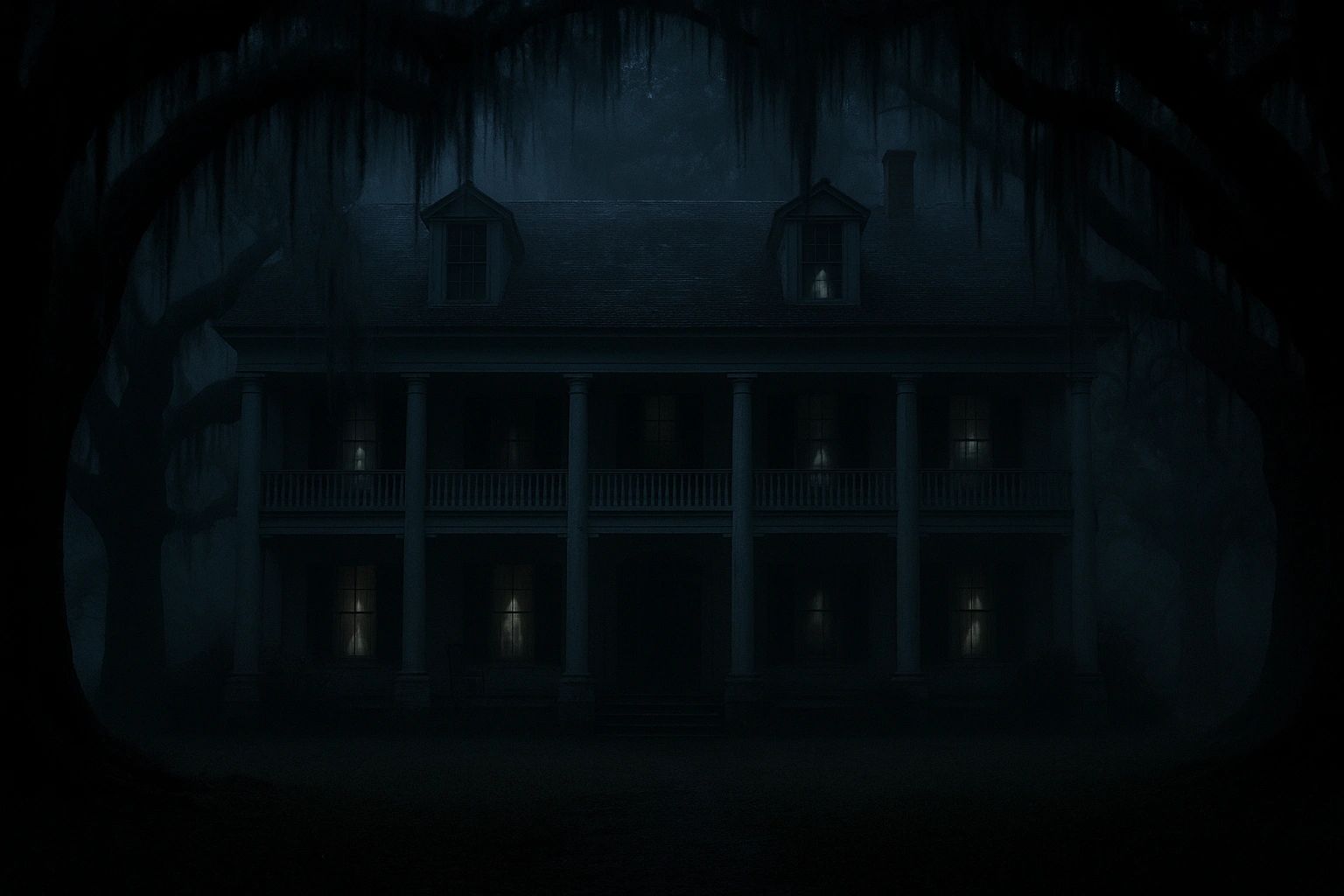
Nestled beneath a canopy of ancient oaks draped in Spanish moss, the Myrtles Plantation in St. Francisville, Louisiana, stands as one of the most famously haunted houses in America. Its white-columned façade and peaceful gardens disguise a far darker history—a tapestry woven with betrayal, murder, and restless spirits said to wander its halls.
For over two centuries, visitors and residents alike have reported inexplicable phenomena within its walls: disembodied footsteps, phantom children laughing in the corridors, and a spectral woman in a turban appearing near the grand staircase. Whether you’re a believer or a skeptic, there’s no denying that the Myrtles Plantation’s haunting reputation has earned it a place among America’s most chilling legends.
This is the story of the ghosts, the legends, and the lingering mysteries that make the Myrtles Plantation a place where the veil between the living and the dead seems impossibly thin.
A Plantation Built on Southern Elegance and Dark Secrets
The story begins in 1796, when General David Bradford, a wealthy lawyer and whiskey trader (and one of the men involved in the Whiskey Rebellion), built the plantation. He named it “Laurel Grove,” a picturesque retreat overlooking lush Louisiana grounds. Bradford lived there with his wife and children after fleeing Pennsylvania for his involvement in the rebellion, granted a pardon years later by President John Adams.
The home itself was a masterpiece of antebellum architecture—its symmetrical design, sweeping verandas, and 10 stately rooms were the epitome of Southern grandeur. But beauty often masks darkness, and the Myrtles would prove no exception.
After Bradford’s death, his daughter Sarah Mathilda and her husband, Judge Clark Woodruff, inherited the property. Their story is where the legends truly begin—and where the haunting roots itself.
Chloe: The Tragic Servant and the Most Famous Spirit
No ghost story in the South is more famous—or more tragic—than that of Chloe, the enslaved woman whose spirit is said to still roam the Myrtles Plantation.
According to legend, Chloe was a house servant owned by Judge Woodruff. She was said to be intelligent, resourceful, and curious—perhaps too curious for her own good. The story claims that Chloe had been caught eavesdropping on one of the Judge’s private conversations. As punishment, her ear was cut off, and she began wearing a green turban to cover the disfigurement.
From this point, the tales diverge. Some say Chloe, seeking revenge or trying to win back her place in the household, baked a poisoned birthday cake with oleander leaves—believing a mild dose would make the family ill enough to depend on her nursing skills. But her plan went horribly wrong. The cake allegedly killed Sarah Mathilda and her two daughters instantly.
Other versions suggest Chloe was coerced by other enslaved people into poisoning the family as part of a plan gone wrong.
Whatever her motive, the story always ends the same: when the other servants realized what she had done—or believed she had done—they dragged Chloe to a tree on the property and hanged her. Her body was thrown into the Mississippi River, and her restless spirit was said to have never found peace.
To this day, guests and tour guides claim to see a woman in a green turban wandering the plantation, appearing suddenly in photographs or peering from the shadows.
One of the most famous pieces of evidence is a photograph taken in 1992 by the proprietors of the Myrtles Plantation for insurance documentation. When developed, the photo revealed the figure of a woman standing between two buildings—semi-transparent, dressed in period clothing, with a head covering. Experts at the time were unable to debunk it, and it remains one of the most circulated “ghost photos” in the world.
Whether real or folklore, Chloe has become the face of the Myrtles’ haunting—a ghost immortalized in whispers, legends, and cold chills down the spine.
The Mirror That Traps Souls
Among the mansion’s most unsettling artifacts is a grand antique mirror said to contain the trapped spirits of Sarah Mathilda Woodruff and her children. According to Southern superstition, mirrors must be covered when someone dies so that their soul does not become trapped inside.
The story goes that after the Woodruffs’ deaths, the mirror in the parlor was never covered. Guests claim that, even today, handprints, faces, and streaks resembling human figures appear in the glass—impossible to clean or remove. Some say the mirror even oozes a strange, oily residue no cleaner can erase.
Tour guides tell of visitors fainting in front of it, seeing ghostly faces staring back, or feeling an icy hand brush theirs as they approach. To the locals, the mirror is more than a relic—it’s a portal between worlds.
The Murder of William Winter: The Man Who Died on the Stairs
If there’s one ghost who rivals Chloe’s fame at the Myrtles, it’s William Winter, a man whose final moments are said to replay endlessly inside the house.
Winter married Sarah Stirling, the daughter of Ruffin Gray Stirling, who purchased the Myrtles in 1834 and expanded it into the grand mansion seen today. By the 1870s, William Winter was living there with his wife and children when tragedy struck.
One evening, a stranger on horseback arrived at the plantation, calling Winter out to the veranda. When Winter stepped outside, the man shot him in the chest and fled. Mortally wounded, Winter staggered back into the house, clutching his chest, and began crawling up the grand staircase toward his wife. He reached the 17th step before collapsing and dying in her arms.
Visitors and staff claim that even now, you can still hear his final steps—slow, labored, echoing through the halls—before the house falls silent. Some say they’ve heard a man’s voice calling out or the thud of a body falling to the floor.
This ghostly “replay” of Winter’s death is one of the most frequently reported hauntings on the property.
Other Ghostly Residents of the Myrtles
But Chloe and Winter aren’t the only spirits said to linger at the plantation. Over the years, more than a dozen apparitions and unexplained occurrences have been reported:
- The Ghost Children: Visitors often hear the giggles and footsteps of children playing in the halls, sometimes tugging at guests’ clothing or rolling toys across the floor. Some believe these are the spirits of Sarah’s daughters.
- The Young Girl in Antebellum Dress: Tour guides have described a spectral girl appearing in period clothing, her face pale and sad, vanishing when approached.
- The Piano That Plays Itself: Late at night, a piano in the parlor has been heard playing faintly—always the same single note, repeating like a broken melody.
- The Handprint on the Bed: One of the plantation’s most chilling legends involves a permanent handprint that allegedly reappears no matter how often the bedding is changed.
- The Mysterious Portraits: Some guests have noted that certain portraits in the home seem to follow them with their eyes—or shift expressions in photographs.
These occurrences, often witnessed by tourists and employees alike, have turned the Myrtles into a mecca for paranormal enthusiasts from around the world.
Fact or Fiction: Unraveling the Myrtles’ Mysteries
Despite the abundance of ghost stories, historians have long questioned the truth behind them. Surprisingly, there’s no historical record of a servant named Chloe ever existing, nor of Sarah Mathilda and her children dying from poisoning. In fact, records suggest they died of yellow fever—a tragically common occurrence in the 1800s.
Similarly, while William Winter was indeed shot and killed, some details of the tale—like his dying on the 17th step—are impossible to verify. Contemporary newspaper reports make no mention of this dramatic death scene, suggesting that the haunting narrative may have been embellished over time.
Yet, even with these historical gaps, the Myrtles Plantation remains a magnet for paranormal curiosity. The lack of verifiable details hasn’t diminished the stories—it’s amplified them. Legends, after all, thrive in the spaces between truth and imagination.
Modern Encounters: Visitors Who Swear the Spirits Still Walk
The Myrtles Plantation is now a bed and breakfast, welcoming guests who dare to spend the night among its spirits. Many come skeptically, leaving with stories they can’t explain.
Visitors report cold spots, phantom footsteps, and objects moving on their own. Cameras malfunction, photographs capture ghostly orbs or faces, and digital recorders pick up faint whispers in empty rooms.
One guest described waking to find a woman in a long dress standing silently at the foot of her bed, watching her before fading into the wall. Another recounted the eerie sensation of a child climbing into bed beside her, only to discover no one there.
Paranormal investigators from across the country have visited the site, capturing unexplained electromagnetic readings, temperature drops, and audio recordings of voices responding intelligently to questions. Some teams even claim to have filmed shadow figures moving in the hallways.
Whether tricks of the mind, natural phenomena, or something truly supernatural, the consistency of the accounts gives pause—even to skeptics.
A Plantation Marked by Death
Part of what gives the Myrtles such a powerful aura is its long and violent history. Over the centuries, it’s been said that ten murders occurred on the property, though only one—the shooting of William Winter—can be historically confirmed.
Still, tales of duels, poisonings, hangings, and disease deaths abound. Each story adds another spectral layer, another voice in the haunted chorus that surrounds the home.
Some paranormal researchers suggest that so much emotional trauma—slavery, suffering, sudden death—may have imprinted itself on the grounds, creating what’s known as a “residual haunting”—a spiritual echo of past pain replaying through time.
The Myrtles Plantation in Popular Culture
The Myrtles’ haunted reputation has made it a fixture of paranormal media. It’s been featured on countless television shows including Unsolved Mysteries, Ghost Hunters, Ghost Adventures, and Most Terrifying Places in America.
Writers, filmmakers, and travel bloggers all seem captivated by the same question: why does the Myrtles Plantation feel so alive with the dead?
Its atmosphere—steeped in the humid stillness of Louisiana’s bayou country—adds to its mystique. The creak of old wood, the flicker of candlelight, the rustle of moss in the night breeze—it’s easy to understand why so many feel the past pressing close.
Why the Myrtles Still Haunts Us
Perhaps what truly haunts the Myrtles isn’t just the ghosts, but what they represent. The plantation’s legends force us to confront the darker truths of Southern history—slavery, injustice, and the human cost behind grandeur.
Chloe’s story, true or not, echoes the real suffering of countless enslaved people whose names were erased from history. The haunting mirror, the cries on the stairs, the spectral children—all serve as symbols of voices silenced long ago.
The Myrtles Plantation, then, becomes more than a ghost story—it’s a living monument to grief and remembrance. Its spirits, whether supernatural or symbolic, remind us that the past is never truly gone.
Staying Overnight: A Haunting Invitation
For those brave enough, spending the night at the Myrtles is a bucket-list experience. The rooms are luxuriously appointed, blending old-world charm with eerie authenticity. Guests can take guided ghost tours by candlelight, exploring the darkened halls while hearing firsthand accounts of the spirits said to dwell there.
The air grows heavy in the corridors, every shadow seems alive, and even the most skeptical visitor can’t help but feel watched. When the clock strikes midnight and the plantation falls silent, it’s easy to imagine the whispers of the past drifting through the magnolia-scented air.
Conclusion: Where History and the Supernatural Meet
The Myrtles Plantation endures as one of the most haunted places in America not just because of its ghosts, but because of its stories. Each tale—of Chloe’s tragic fate, of William Winter’s dying steps, of mirrors and children and piano notes in the dark—adds another thread to its haunted legacy.
In the end, perhaps that’s what keeps people returning. We come seeking proof of the supernatural, but we find something deeper: a connection to the weight of history, the persistence of memory, and the haunting truth that some stories refuse to die.
So if you ever find yourself beneath the whispering oaks of St. Francisville, step through the doors of the Myrtles Plantation—but tread carefully. The past is waiting, and it may not be as silent as you think.
Bibliography
- Myrtles Plantation Official Website: https://www.myrtlesplantation.com
- “Ghosts of the Myrtles Plantation” – Unsolved Mysteries episode archive
- National Register of Historic Places, St. Francisville, Louisiana (Myrtles Plantation entry)
- McCown, H. (1992). Louisiana’s Haunted History. Baton Rouge Press.
- Lewis, P. (2005). Ghosts Along the Bayou: Tales of the Haunted South. Pelican Publishing.
- Paranormal Society Reports: Louisiana Ghost Investigators, 2011 Field Notes.
- “The Haunting of the Myrtles Plantation” – History Channel: Haunted History Series, 2001.
- “Chloe and the Cursed Mirror: The Truth Behind the Myrtles Plantation Legend” – Southern Gothic Review, Vol. 12 (2019).
About the Author
Rebecca “Madam Chronicler” Ryan is a writer and researcher for The Chronicler Library. She is the co-creator of The Chronicle of Fear and The Waterline Chronicles, and a lead researcher and contributor for The Captain’s War Chronicles and The Captain’s Cellar. Her work blends myth, history, and the natural world with empathy, insight, and intellectual rigor.
Originally published at the live site .