
The Haunting of the Stetson Mansion
In the quiet, oak-lined streets of DeLand, Florida, stands a grand reminder of the Gilded Age — the Stetson Mansion, once the winter home of hat magnate John B. Stetson. But beyond its ornate woodwork and opulent stained...
By Rebecca "Madam Chronicler" Ryan
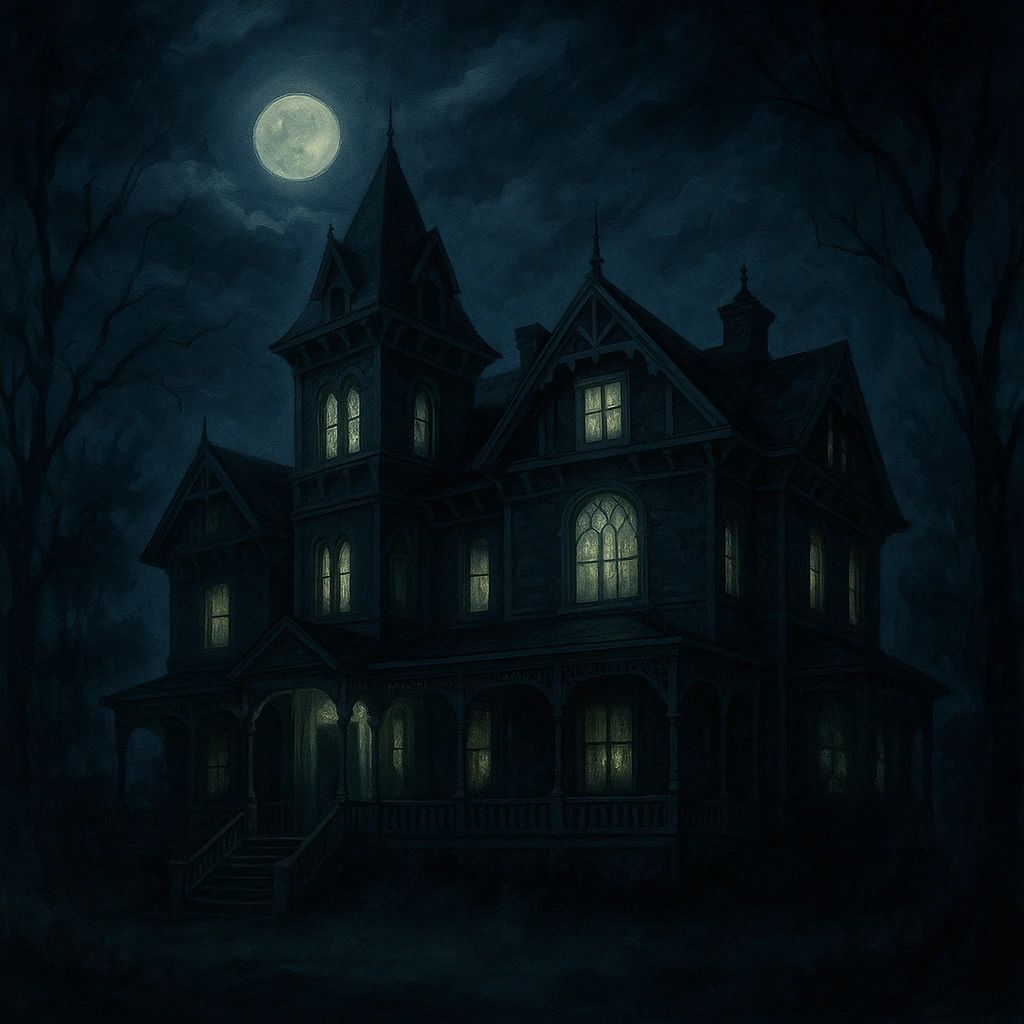
In the quiet, oak-lined streets of DeLand, Florida, stands a grand reminder of the Gilded Age — the Stetson Mansion, once the winter home of hat magnate John B. Stetson. But beyond its ornate woodwork and opulent stained glass lies a deeper, darker layer of its legacy. Over the years, whispers have spread that the mansion is not just Florida’s first luxury estate — but also one of its most haunted.
This is the story of The Haunting of the Stetson Mansion — where echoes of laughter from long-dead party guests still dance through the halls, and the spirit of the man who built an empire may never have left his winter retreat.
A Mansion Built for Greatness — and Secrets
When John B. Stetson commissioned the mansion in 1886, he wanted more than a winter home — he wanted a palace. Designed by architect George T. Pearson, the mansion was Florida’s first luxury estate, featuring innovations that were revolutionary for the time: electricity installed by Thomas Edison himself, indoor plumbing, and hand-carved details imported from Europe.
It was a monument to the American dream — a symbol of how a hat maker from New Jersey could rise to the heights of fame and fortune. Yet, as history often reminds us, where opulence and ambition intertwine, so too do the restless spirits of those who built them.
Many who have visited the mansion over the years say the air inside holds more than just the scent of polished wood and citrus oil — it carries the presence of something unseen, lingering quietly among the ornate floors and stained glass.
The Spirit of John B. Stetson
John B. Stetson was known as a devout Christian and a man of generosity. He poured his wealth into philanthropy, most famously founding Stetson University in DeLand. Yet he was also a man of strong will, obsession, and relentless energy — traits that often mark spirits unwilling to leave the world they shaped.
Some believe Stetson’s ghost still roams the mansion’s halls, not out of torment, but out of duty — keeping watch over his creation.
Visitors have reported catching the faint scent of cigar smoke in the grand hallway, despite the house being strictly non-smoking. Others have heard the rustle of footsteps in the music room late at night, or glimpsed the figure of a man in period clothing standing by the window before vanishing into thin air.
In one particularly famous account, a tour guide described walking into the study only to feel an overwhelming presence. “It was as if someone was standing behind me, looking over my shoulder,” she said. “The room was ice-cold — and when I turned around, I could swear I heard a whisper: ‘Not yet finished.’”
To this day, many believe that phrase refers to Stetson’s ongoing guardianship over his mansion — a house he refuses to leave unfinished, even in death.
The Music Room’s Mysterious Melodies
The Music Room is one of the mansion’s most breathtaking spaces, with high ceilings, stained glass windows, and elaborate parquet floors. During Stetson’s lifetime, it hosted glittering soirées — evenings filled with laughter, piano music, and the hum of conversation among the elite.
But in the silence of modern nights, visitors and caretakers have reported a different kind of melody.
The piano, though perfectly tuned and locked when not in use, has been known to play a single, haunting note — often just as the clock strikes midnight. At first, it was dismissed as the settling of old wood or electrical interference. But the phenomenon continued. Sometimes, it isn’t just a note — it’s a chord, faint but clear, drifting through the halls when no one is inside.
Guests on late-night tours have described feeling chills, as though unseen hands were brushing against the piano keys.
One visitor wrote in a journal entry:
“I stood in the Music Room and heard what sounded like three soft notes — like someone testing the keys. But when I turned to look, the piano was still, the lid down. I knew then the mansion was alive.”
The Woman in White
Every grand old mansion has a “woman in white,” and the Stetson Mansion is no exception. Over the decades, multiple guests have reported sightings of a female apparition gliding down the grand staircase or appearing in the reflection of mirrors.
Descriptions vary slightly, but most agree she is dressed in a flowing, turn-of-the-century gown, her face serene yet sorrowful. Some say she is a former servant who died tragically in the house; others believe she may be one of Stetson’s guests who never truly left.
One of the earliest recorded sightings dates back to the 1920s, when the mansion had passed through new ownership. A maid claimed she saw “a lady in white walking through the hallway holding a lantern,” disappearing before her eyes. When the maid told her employer, she was dismissed — until others began to see her too.
In more recent times, visitors touring the mansion during its Christmas Spectacular event have reported glimpses of the same figure. She is often seen near the upper landing of the staircase, where the light of the stained glass window casts an ethereal glow — as if illuminating her passage from another realm.
Strange Lights and Whispering Shadows
Perhaps the most chilling stories come from workers and caretakers who have spent long hours inside the mansion after dark.
During the home’s massive restoration in the early 2000s, several contractors reported strange occurrences. Tools would vanish and reappear in different rooms. Footsteps echoed on the second floor when no one was upstairs. Lights flickered, and doors that had been locked were found open the next morning.
One worker claimed he saw a “shadow figure” standing in the doorway to the parlor — tall, motionless, and watching. When he turned to address the figure, it vanished.
Another worker, painting the ceiling of the grand hallway, reportedly heard a man’s voice behind him say, “Good job, son.” He turned around expecting to see the homeowner — but the room was empty.
Even the mansion’s current owners have acknowledged strange occurrences. During one Christmas season, a heavy garland fell from the wall in the music room, seemingly pushed rather than dropped. A review of security footage showed no one nearby at the time.
Echoes of the Past: The Children’s Room
Perhaps the most unnerving space in the Stetson Mansion is what was once the children’s room. John and Elizabeth Stetson were known to host their family here during the winter months, and children’s laughter once filled the halls.
But those echoes haven’t entirely faded.
Several visitors have reported hearing what sound like children’s footsteps running across the second floor, accompanied by giggles or whispers. One guide claimed that while locking up after a tour, she heard the faint sound of a music box playing — though none were present in the room.
Another unsettling phenomenon involves the door. Guests have seen it slowly creak open on its own, as if someone were peeking inside — though the hinges are well-oiled and silent.
One local psychic who visited the mansion described the room as “brimming with young energy — playful, curious, but not malicious.” She claimed the spirits are residual, reliving moments of joy rather than tragedy.
Haunting or History’s Residue?
Some experts argue that the mansion’s hauntings are not the work of intelligent spirits but residual energy — echoes imprinted into the very walls of the house.
This theory suggests that intense emotions, whether joy, sorrow, or passion, can leave a kind of psychic fingerprint. The Stetson Mansion, having witnessed countless celebrations, music, and moments of reflection, may have absorbed this energy — replaying fragments of its history in subtle, ghostly ways.
Visitors often report feeling a strange vibration or warmth in certain rooms, especially near the stained-glass windows. Paranormal researchers have brought EMF (electromagnetic field) detectors to investigate, noting occasional spikes near the piano and the main staircase — though no definitive evidence has been found.
Still, the experiences persist. Whether ghosts or memories, something within those walls seems alive — responding to the living, just out of sight.
The Christmas Spirits
The Stetson Mansion is famous for its Christmas Spectacular, a holiday tour that transforms the home into a glittering wonderland of light and music. But with beauty comes something eerier — many guests say the season amplifies the paranormal.
Perhaps it’s the emotional resonance of the holidays, or the mansion’s long connection to gatherings and music, but strange events spike during December.
Staff have reported hearing footsteps during setup when no one else is in the house. Decorations move slightly, as though brushed by unseen hands. Visitors have felt sudden chills, especially near the grand staircase.
One year, a Christmas tree topper inexplicably fell and shattered — but only after a guide mentioned John Stetson’s name. The staff later joked that “Mr. Stetson didn’t like that story,” but some weren’t laughing.
As one local historian put it:
“If there’s any time the mansion feels most alive — or most haunted — it’s Christmas. The spirits seem to wake up with the lights.”
The Mansion’s Sacred Past
Few realize that the Stetson Mansion once served a higher purpose beyond luxury and leisure. John B. Stetson was a devout Baptist, and the mansion’s parlor often doubled as a private chapel. Services were held for family, guests, and even townspeople, with hymns filling the house every Sunday.
It’s possible this spiritual energy contributed to the home’s strange aura — not one of evil, but of lingering reverence.
Some visitors have described a sense of calm or holiness in certain rooms. A psychic who toured the property in 2017 claimed she felt a “protective presence” throughout the mansion, suggesting that Stetson himself or his family might still watch over it.
While many haunted houses are associated with tragedy or violence, the Stetson Mansion’s hauntings seem different — more like guardianship than malice. The spirits here are not angry; they are attached — to the beauty, to the history, and to the legacy of the man who built it.
A Florida Legend Reawakened
The Stetson Mansion stood nearly forgotten for much of the 20th century until its massive restoration began in the early 2000s. When contractors peeled back layers of neglect, they unearthed not just architectural marvels but, perhaps, spiritual energy long dormant.
Since reopening to the public, visitors have described the mansion as “electric” — not just because of its restored Edison wiring, but because of the energy that seems to hum within its walls.
Paranormal investigators have visited the site several times, recording unexplained cold spots, orbs in photographs, and faint EVPs (electronic voice phenomena). While skeptics dismiss such findings as coincidence, believers argue the consistency of reports points to genuine hauntings.
The Stetson Mansion in Popular Culture
Over time, the Stetson Mansion has earned its place in Florida’s folklore. It has been featured on television programs, travel blogs, and historical tours not only for its beauty but for its mystique.
Paranormal enthusiasts often compare it to other haunted Southern estates such as The Myrtles Plantation in Louisiana or McRaven House in Mississippi. Yet the Stetson Mansion stands apart. Its hauntings are not rooted in tragedy but in memory — the lingering echo of a family and a legacy that shaped DeLand itself.
Even skeptics who visit the mansion often leave unsettled. One journalist, after spending a night there for a feature story, confessed:
“I don’t believe in ghosts. But as I stood in that music room, I felt watched. And when the piano chimed once in the dark, I didn’t stay to investigate.”
Why the Stetson Mansion Haunting Endures
Part of what makes the Stetson Mansion haunting so compelling is that it reflects Florida’s transformation — from a wild frontier into a cultural haven. The mansion is a physical embodiment of ambition, beauty, and the passage of time.
When visitors step through its carved wooden doors, they aren’t just walking into a historic home — they’re stepping into a layered echo of human experience. Every creak of the floorboard, every flicker of a candlelight reflection feels like history breathing again.
In a way, the mansion’s hauntings may not be supernatural at all, but emotional — a resonance between the living and the dead. Those who lived, loved, and dreamed within these walls left something behind — and those who visit today awaken it.
Conclusion: Where the Past Still Lives
The Stetson Mansion is more than an architectural jewel; it’s a living entity — one that carries within it the whispers of Florida’s Gilded Age. Whether you believe in ghosts or not, there’s no denying the feeling one gets while walking through its corridors: that you are not alone.
Perhaps John B. Stetson still walks his grand hallways, overseeing the home he poured his fortune and soul into. Perhaps the music that drifts through the air is simply a trick of acoustics. Or perhaps, as the wind rustles through the palms outside and the sunlight filters through the stained glass, the mansion itself remembers — and invites us to remember with it.
The Stetson Mansion stands as a monument not just to wealth and design, but to the enduring bond between past and present. A place where time refuses to fade completely — and where, if you listen closely, the echoes of its history still sing.
Bibliography
- Adams, William R. DeLand: The Athens of Florida. DeLand Historical Society, 1995.
- Brown, Canter. Florida’s Pioneer Heritage. University Press of Florida, 2001.
- DeLand Historical Archives. “Ghosts of the Gilded Age: The Stetson Mansion’s Haunted Past.” (Local Oral Histories Collection, 2017).
- McCarthy, Kevin M. The Ghostly Guide to Florida: Haunted Places and Stories. Pineapple Press, 2012.
- National Park Service. “Stetson Mansion.” National Register of Historic Places, U.S. Department of the Interior, 2014.
- Solari, Michael, and Thompson, J.T. Restoring the Stetson Mansion: A Labor of Love. Stetson Mansion Press, 2016.
- Tebeau, Charlton W. A History of Florida. University of Miami Press, 1980.
- Visit Florida. “The Stetson Mansion: Florida’s Most Historic (and Haunted) Home.” Tourism Brochure, 2023.
- White, Pamela. Haunted Florida: The Spirits of the Sunshine State. Southern Heritage Press, 2018.
About the Author
Rebecca “Madam Chronicler” Ryan is a writer and researcher for The Chronicler Library. She is the co-creator of The Chronicle of Fear and The Waterline Chronicles, and a lead researcher and contributor for The Captain’s War Chronicles and The Captain’s Cellar. Her work blends myth, history, and the natural world with empathy, insight, and intellectual rigor.
Originally published at the live site .