
Folklore ·
The Phantom Sailors of Cape Canaveral
Introduction
By Rebecca "Madam Chronicler" Ryan
Introduction
Cape Canaveral is famous across the world as the launchpad of human exploration into space. Rockets, astronauts, and history-making missions dominate the narrative of this windswept piece of Florida’s east coast. Yet beneath the roar of engines and the gleaming technology lies another, older story. Long before NASA and SpaceX set their sights on the stars, Cape Canaveral was a treacherous stretch of shoreline where countless sailors lost their lives.
And according to locals, many of those mariners never truly left.
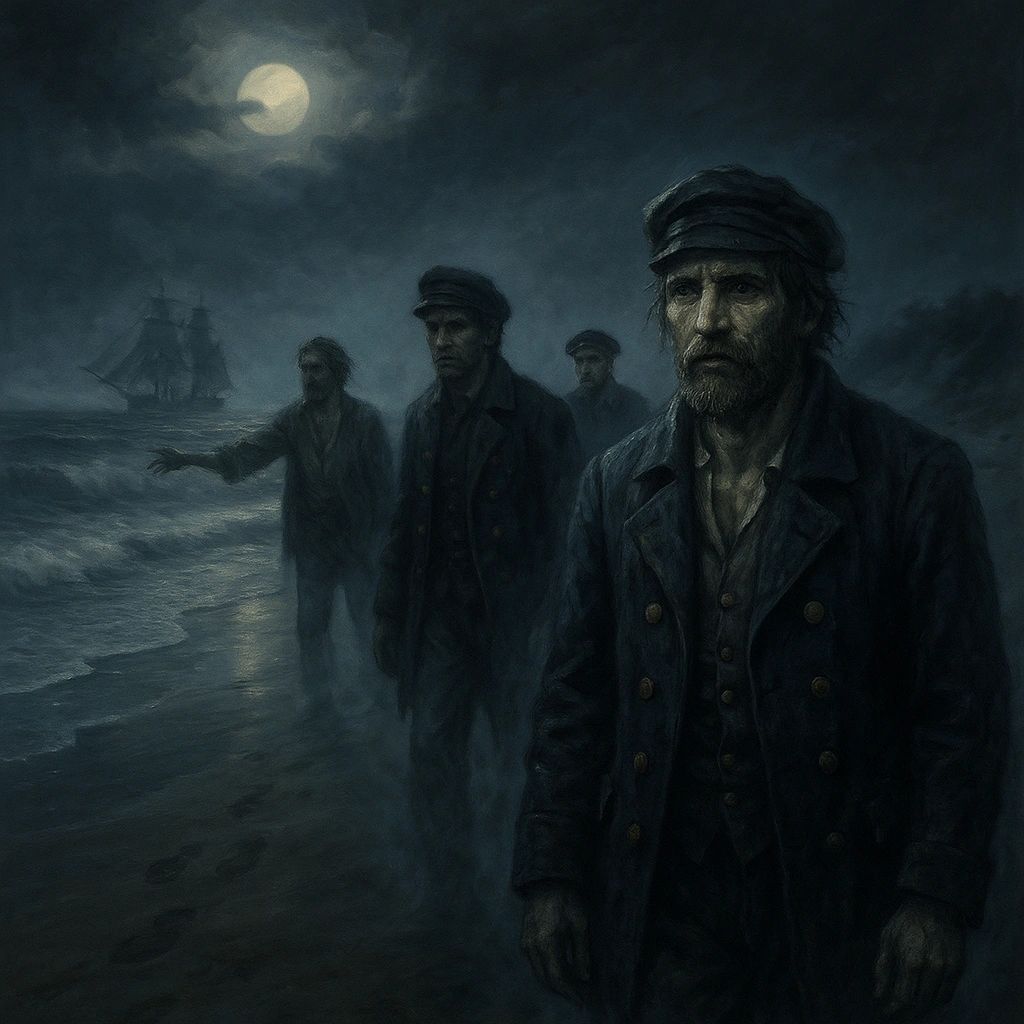
The phantom sailors of Cape Canaveral are part of Florida’s deep tapestry of ghostly lore. Their stories speak of shipwrecks, storms, tragic drownings, and spectral figures that emerge from the mist. To walk the beaches of the cape at night, some say, is to risk meeting the eyes of those long gone—sailors whose souls remain bound to the Atlantic surf.
In this blog, we’ll dive deep into the legends of Cape Canaveral’s phantom sailors: their history, their hauntings, and the ways they continue to influence both folklore and paranormal exploration.
The Dangerous Waters of Florida’s “Graveyard”
Cape Canaveral juts out prominently into the Atlantic Ocean. To seafarers of past centuries, that meant two things: opportunity and danger.
- Treacherous Reefs and Shoals: The waters just off the cape are dotted with shifting sandbars and hidden reefs. Ships that veered even slightly off course risked tearing open their hulls.
- Storm Alley: Florida’s east coast is no stranger to hurricanes. Before modern forecasting, storms could come without warning, driving ships onto the rocks.
- The Gulf Stream: This powerful current sweeps past the cape. For navigators unfamiliar with its pull, it could drag vessels into danger or delay rescue.
Historians estimate that hundreds of ships may have wrecked along the Cape Canaveral coast between the 16th and 19th centuries. Spanish treasure galleons, English merchant ships, and American schooners alike found themselves swallowed by the sea. Each wreck meant not only lost cargo but also lives—sailors who drowned in sight of shore or were dashed against the rocks.
Such a high concentration of maritime tragedy all but guaranteed ghost stories.
Early Legends: Spanish Galleons and Doomed Crews
The 1715 Treasure Fleet Disaster
In 1715, a fleet of Spanish treasure ships carrying gold and silver from the New World set sail. A hurricane struck off Florida’s coast, destroying most of the vessels. Many went down near Cape Canaveral. Survivors crawled ashore, only to face starvation or attacks from raiders.
Fishermen later reported seeing ghostly galleons shimmering on the horizon, fading as they approached. Even today, some treasure hunters claim to hear phantom voices on the wind or see lights beneath the waves where the fleet sank.
The “Drowned Men” of the Sandbars
By the 1800s, sailors spoke of figures rising from the surf on stormy nights—wet, bedraggled men stumbling onto shore before vanishing into the dunes. Locals began calling them the “drowned men,” thought to be the spirits of mariners who died unable to reach safety.
The Phantom Sailors Themselves
But what of the sailors’ ghosts said to haunt Cape Canaveral today? Their appearances are varied, but recurring patterns emerge.
Apparitions on the Shore
- Uniformed Sailors: Witnesses report seeing men in ragged naval or merchant uniforms from centuries past. Some stand staring out to sea, others march silently along the shoreline.
- Vanishing Footprints: Hikers sometimes find fresh boot prints in the sand leading toward the water, only to disappear at the tide line.
- Eerie Encounters: A recurring story tells of joggers at dawn who see a solitary sailor waving them down for help—only for him to fade when approached.
Ghost Ships on the Horizon
Boaters speak of phantom vessels that appear in the distance. These ships often look like old wooden galleons or schooners, sails full despite the calm wind. As witnesses draw closer, the ship dissolves into mist.
Voices in the Surf
Perhaps the most chilling phenomenon are the disembodied voices. Fishermen, campers, and even space workers at the Cape report:
- Cries for help carried on the wind.
- The sound of sailors singing shanties at night.
- Whispers rising with the waves, only to vanish when the surf recedes.
A Collision of Past and Present
What makes Cape Canaveral’s phantom sailors especially fascinating is their coexistence with cutting-edge science. The same coastline where sailors’ ghosts allegedly walk is home to Kennedy Space Center, the launch pad for humanity’s greatest technological achievements.
Paranormal enthusiasts point to this juxtaposition: the ghosts of men who perished seeking to master the sea now wander a place where humans strive to conquer the sky and space. Some even speculate that the intense energy of rocket launches disturbs spiritual activity, reawakening the phantom sailors.
Famous Ghostly Accounts
The Lighthouse Keeper’s Tale
Cape Canaveral Lighthouse, first lit in 1849, quickly gained a reputation for hauntings. A keeper reportedly heard boots marching up the tower stairs when he was alone. Others saw dripping-wet sailors standing by the light before disappearing.
The Fisherman’s Encounter
In the 1960s, a fisherman told newspapers he was approached by a sailor in tattered clothes asking for water. The fisherman turned to fetch some, but when he looked back, the sailor had vanished. His footprints, however, remained in the sand—until they stopped abruptly a few feet away.
Phantom Sailors and Astronauts
Some NASA employees have their own ghost stories. A technician once claimed he saw a line of sailors marching across a launch complex at dusk. At first he thought it was a reenactment, until the figures faded into thin air.
Explanations for the Hauntings
Spiritual Theories
- Restless Dead: The most common belief is that the sailors’ souls remain restless, either seeking rescue or bound to the place of their violent deaths.
- Echoes in Time: Some paranormal researchers suggest that the apparitions are recordings of the past, “imprinted” on the land and replaying under certain conditions.
Natural Explanations
- Mist and Moonlight: Fog banks rolling in from the Atlantic can easily form human-like shapes in dim light.
- Acoustic Tricks: The ocean is notorious for carrying and distorting sound, possibly explaining ghostly voices.
- Ship Illusions: Refraction and mirages can cause distant vessels to appear closer—or older—than they are.
Psychological Factors
The reputation of Cape Canaveral as a haunted coast may prime visitors to interpret ordinary sights and sounds as supernatural. The mind fills in the gaps, especially in isolated, eerie settings.
Paranormal Investigations
- Local Paranormal Groups: Several Florida-based teams have conducted nighttime investigations along the beaches and at the lighthouse. Many report capturing unexplained EVP (Electronic Voice Phenomena) resembling cries or shouts.
- National Shows: While not as famous as St. Augustine’s ghosts, Cape Canaveral has appeared in documentaries and specials on haunted coasts.
- Treasure Hunters’ Testimony: Divers searching for wrecks sometimes claim strange experiences—sudden chills in warm water, or the feeling of unseen hands pulling them back.
The Phantom Sailors in Folklore and Culture
The phantom sailors have become woven into local culture.
- Storytelling: Campers, fishermen, and tour guides repeat the legends, blending fact and myth.
- Literature: Florida authors often include references to ghostly sailors or cursed wrecks along the cape.
- Tourism: While not as commercialized as Key West’s or St. Augustine’s hauntings, Cape Canaveral’s spectral lore is beginning to attract ghost tourism.
Why These Ghost Stories Endure
The phantom sailors’ legends endure because they touch on universal human fears and desires:
- The Fear of Drowning
- Unfinished Journeys
- The Thin Line Between Past and Present
- The Ocean’s Mystery
Visiting Cape Canaveral Today
Key sites for curious visitors include:
- Cape Canaveral Lighthouse
- Playalinda Beach
- Jetty Park
- Nearby Shipwreck Dive Sites
Conclusion
The phantom sailors of Cape Canaveral are more than ghost stories. They are echoes of a long and tragic maritime history. For every rocket that rises skyward, there are countless men who never even survived the sea.
Whether restless souls, illusions, or echoes of memory, the phantom sailors remind us that Cape Canaveral’s past still lingers beneath its modern surface. Stand on the beach at night, listen to the surf, and you may just hear the voices of those long gone—sailors forever bound to Florida’s haunted coast.
Bibliography
- Berman, Bruce. Shipwrecks of Florida: A Comprehensive Listing. Pineapple Press, 2003.
- Dunn, Hampton. Haunted Florida: Ghosts and Strange Phenomena of the Sunshine State. Stackpole Books, 1997.
- McCarthy, Kevin M. Florida Ghost Stories. Pineapple Press, 1994.
- Morey, Michael. Lighthouses of the Florida Coast: Shining Beacons of the Sunshine State. Globe Pequot Press, 2014.
- Proctor, Samuel. A History of Cape Canaveral and Its People. University of Florida Press, 1960.
- Rickard, Meryl. Florida’s Ghostly Legends and Haunted Folklore: The East Coast and the Keys. Pineapple Press, 2005.
- Wagner, Richard. The 1715 Spanish Treasure Fleet: Disasters, Discoveries, and the Making of a Legend. Seafarer Books, 2010.
About the Author
Rebecca “Madam Chronicler” Ryan is a writer and researcher for The Chronicler Library. She is the co-creator of The Chronicle of Fear and The Waterline Chronicles, and a lead researcher and contributor for The Captain’s War Chronicles and The Captain’s Cellar. Her work blends myth, history, and the natural world with empathy, insight, and intellectual rigor.
Originally published at the live site .