Folklore ·
The Casket Girls of New Orleans: Unraveling the Legend
When one speaks of New Orleans—a city steeped in mystery, music, and magic—tales of restless spirits and old-world superstition drift as easily as the scent of magnolia and aged bourbon in the humid air. Beneath the surf...
By Rebecca "Madam Chronicler" Ryan
When one speaks of New Orleans—a city steeped in mystery, music, and magic—tales of restless spirits and old-world superstition drift as easily as the scent of magnolia and aged bourbon in the humid air. Beneath the surface of jazz and revelry lies a darker undercurrent of history, one that blurs the line between myth and memory. Among these haunting tales, few are as enduring—or as chilling—as the legend of The Casket Girls of New Orleans.
This is their story: a tale that begins in the 18th century with a ship from France, carrying young women, their delicate chests, and a mystery that would feed the city’s ghostly lore for generations.
The Birth of a Colony—and a Problem
In the early 1700s, New Orleans was still in its infancy—a rough French outpost clinging to the banks of the Mississippi River, surrounded by swamps, mosquitoes, and uncertainty. Founded in 1718 by Jean-Baptiste Le Moyne de Bienville, the settlement was meant to be the crown jewel of France’s Louisiana territory.
But there was a problem: women were scarce. The population consisted largely of male soldiers, traders, and convicts sent from France. Morale was low, crime was high, and the colony teetered on chaos. To stabilize it, the French government and Catholic Church agreed on a solution—to send young women to New Orleans to become wives and mothers, and help establish family life in the wild new colony.
These women were known as “filles à la cassette”—literally, “girls with small chests.”
Their name came from the small, coffin-shaped trunks—or cassettes—in which they carried their belongings. Over time, the English-speaking settlers would mishear the term, transforming it into “Casket Girls.”
The Voyage Across the Atlantic
The first group of Casket Girls arrived in New Orleans around 1728. The journey across the Atlantic was long and treacherous—months of storms, disease, and fear. Many of the girls were young—some barely teenagers—drawn from orphanages and convents in France. The Catholic Church, particularly the Ursuline nuns, oversaw their selection.
The women were said to be virtuous, god-fearing, and modest, chosen specifically to bring decency and stability to the colony. Each was issued a small trunk containing the sum of her possessions: a few dresses, a Bible, and perhaps a crucifix or a rosary.
But when their ship docked at the port of New Orleans, the colonists who came to meet them were surprised—and uneasy.
The trunks the girls carried were small, yes—but strangely shaped, narrow and long like miniature coffins. And when the girls stepped ashore, pale from their voyage and dressed in their modest gowns, whispers began to spread.
Some said they seemed too quiet, too solemn. Others swore that their eyes were unnaturally bright, their skin too fair for anyone who had endured such a journey.
The Ursuline Convent: Sanctuary or Prison?
Upon arrival, the Casket Girls were placed under the care of the Ursuline nuns, who had recently completed their convent on Chartres Street—the building now known as the Old Ursuline Convent.
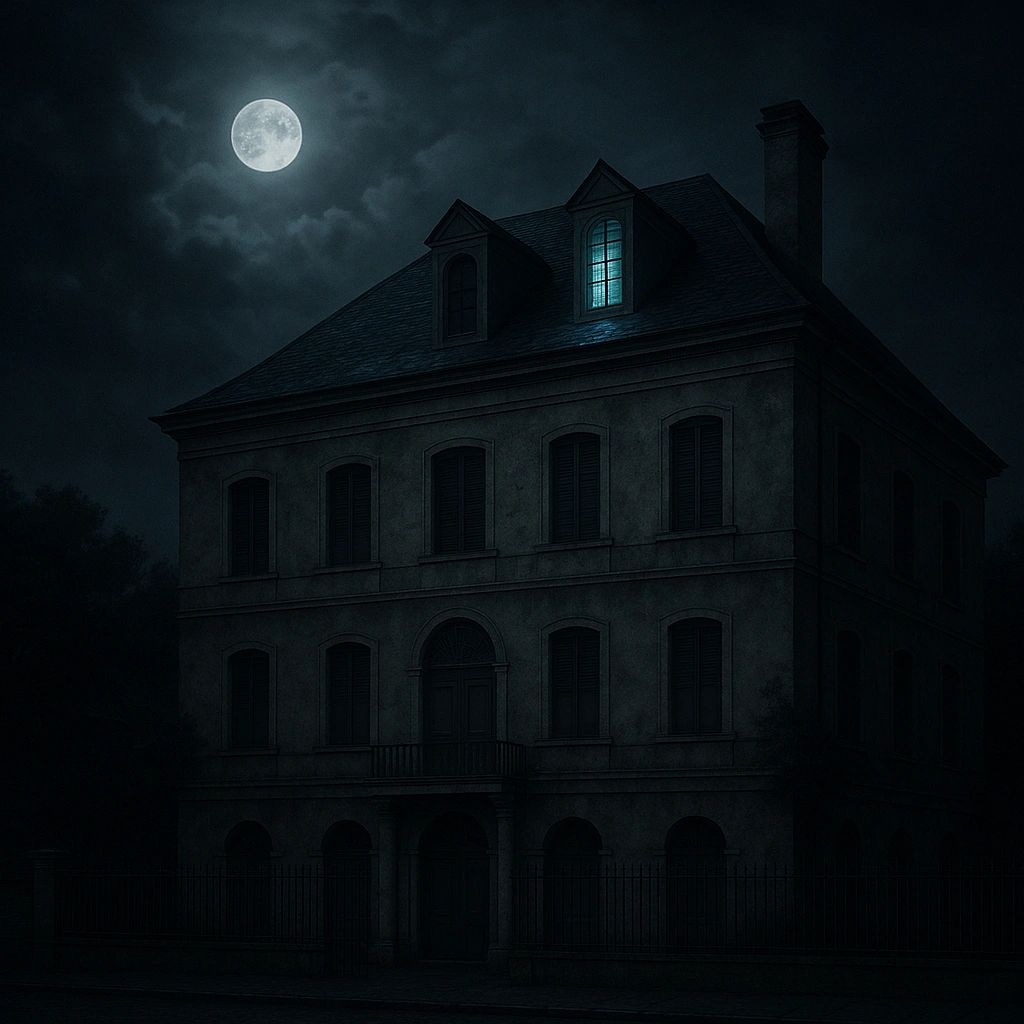
Completed in 1752, it remains one of the oldest surviving buildings in the Mississippi Valley, its steep roof and arched windows a testament to French Colonial architecture. But beneath its serene façade, the convent became the epicenter of one of New Orleans’ most unsettling legends.
The nuns were strict and devout, ensuring that the young women were properly educated and protected until they could be married. The girls’ trunks were stored in the attic of the convent, which was sealed and secured with heavy locks and nailed-shut shutters.
Here is where fact begins to blur with the supernatural.
The Legend of the Casket Girls’ Attic
As the story goes, strange things began to happen soon after the arrival of the Casket Girls. The nuns reported mysterious noises emanating from the attic at night—scratching, whispering, even cries.
When they investigated, they found the shutters unfastened—though they had been locked and nailed the night before. The air inside was unnaturally cold, and some swore they felt a presence watching them.
Fearing something unholy, the nuns resealed the attic and placed blessed crosses upon the doors and windows. The Archbishop ordered the attic permanently sealed with holy nails, and no one was allowed to enter again.
According to legend, the “caskets” the girls brought from France were not trunks at all—but coffins. Some whispered that the girls themselves were not human, but vampires, sent to New Orleans under the guise of brides, bringing with them the darkness of the Old World.
Vampires in the Crescent City
The myth of the Casket Girls fed directly into New Orleans’ rich tradition of vampire lore—a fascination that continues to this day.
In the 18th and 19th centuries, the city was a melting pot of cultures and beliefs: French, Spanish, African, and Caribbean traditions all intertwined, creating a fertile ground for stories of the supernatural.
Reports of “blood-drinkers” and “night stalkers” circulated through the French Quarter. Victims were said to have been found pale and drained, their corpses bearing mysterious puncture wounds.
The Casket Girls’ legend became a convenient explanation. Their arrival from Europe—a continent already teeming with vampire folklore—combined with their eerie reputation and the secrecy surrounding the convent attic, wove a narrative that New Orleans could not resist.
Even today, the attic of the Old Ursuline Convent remains sealed. Visitors can tour the lower floors, but the third floor—the supposed resting place of the Casket Girls’ trunks—remains off-limits.
Some say the reason is purely historical preservation. Others whisper that the locks remain not to protect the attic from trespassers—but to protect the world from what lies within.
Historical Truths Behind the Legend
Like many ghost stories, the tale of the Casket Girls is rooted in fragments of truth, woven with centuries of embellishment.
Historians confirm that groups of filles à la cassette were indeed sent from France to New Orleans and other French colonies, such as Mobile and Biloxi, to help populate the territories. Their caskets were merely small luggage trunks—not coffins—and the girls were supervised by the Church until marriage.
As for the attic of the Old Ursuline Convent, while it is indeed sealed, this is due to structural preservation and protection from humidity—not vampires.
Still, the mystery persists. The combination of religion, female isolation, and secrecy created a fertile ground for speculation. In a city as steeped in myth as New Orleans, truth often dances hand-in-hand with the supernatural.
The Power of the Feminine and the Fear of the Unknown
Beyond its supernatural trappings, the legend of the Casket Girls reveals something deeper about the fears and fascinations of colonial life.
In a patriarchal society where women were often viewed as property or moral stabilizers, the arrival of mysterious young women—educated, devout, yet independent—stirred both curiosity and suspicion.
To the rough, male-dominated colony, the Casket Girls represented a paradox: purity mixed with danger, faith intertwined with mystery. The vampire myth that grew around them can be seen as a manifestation of that tension—a way to explain the unease that independent, foreign women inspired in the fragile order of colonial New Orleans.
Haunted Echoes: The Convent Today
The Old Ursuline Convent still stands on Chartres Street, its weathered façade silent beneath the Louisiana sun. It now serves as a museum and historical site, showcasing centuries of New Orleans’ Catholic heritage.
Yet many visitors claim to feel an unshakable chill as they approach the building. Some report faint whispers near the attic, the sound of soft footsteps on the upper floors, or the creak of old shutters when no wind stirs.
Paranormal investigators have flocked to the site for decades. Photographs taken at night show strange lights in the windows, and electronic voice phenomena (EVPs) have captured faint murmurs that some claim are the voices of the Casket Girls themselves.
The attic remains locked, the key held by the Archdiocese. Whether out of respect for history—or fear of what might emerge—no one dares to open it.
The Casket Girls in Popular Culture
The legend has transcended folklore, finding its way into books, films, and television. The Casket Girls have appeared in episodes of American Horror Story: Coven, inspired countless vampire novels, and are a favorite subject of ghost tours in the French Quarter.
Each Halloween, guides lead candlelit walks through the Quarter, stopping outside the convent to recount the chilling tale. Tourists glance nervously at the shuttered attic, half-expecting to see a pale face peering out from the darkness.
Even local musicians and artists have drawn inspiration from the story, using it as a symbol of the city’s complex blend of beauty, darkness, and resilience.
Myths That Never Die
What makes the story of the Casket Girls so enduring? Perhaps it’s because it touches something primal—a fear of the unknown, of the foreign, of what lurks behind locked doors.
It also embodies the very essence of New Orleans itself: a city where faith and sin coexist, where history is never quite buried, and where every shadow holds a story.
The legend of the Casket Girls endures not because it is proven, but because it feels true. The humid nights, the flickering gas lamps, the echo of footsteps on cobblestone streets—all seem to whisper that in New Orleans, anything is possible.
Modern Encounters and Continuing Mysteries
Even today, stories persist.
Locals claim that on certain nights, you can see faint figures walking along Chartres Street, their white gowns fluttering in the humid breeze. Some say the smell of old roses lingers near the convent gates when no flowers are in bloom.
A few visitors have reported awakening in nearby hotels with scratches on their arms or strange marks on their necks. The more superstitious whisper that the Casket Girls—or what they became—still wander the French Quarter under cover of darkness.
In 1978, during renovations near the convent, workers allegedly uncovered several small, coffin-shaped boxes buried in the ground. The Archdiocese quickly ordered the area resealed, and no official record of the find exists.
Coincidence? Or another piece of the puzzle?
In New Orleans, such questions are rarely answered. The city prefers its mysteries intact.
A City of Spirits
The Casket Girls’ tale stands as one of New Orleans’ most haunting legends—but it is far from the only one. The city is filled with ghosts: of pirates and priests, voodoo queens and vagrants, soldiers and sinners.
But perhaps the Casket Girls remain the most enduring because they were real. They were flesh and blood—young women brought across the ocean to a strange, dangerous world. Whether or not they were vampires, they were certainly victims of their time: of colonial politics, gendered fear, and the need to control women’s stories.
Their legend, then, becomes both a ghost story and a mirror—a reflection of the ways in which society turns women into myths when it cannot understand them.
Eternal Brides of the Crescent City
Today, visitors to the Old Ursuline Convent can stand in the quiet courtyard and imagine the scene centuries ago—the ship docked at the port, the young women stepping onto the muddy banks, clutching their mysterious caskets, their eyes wide with both hope and dread.
They came seeking a new life, but found themselves immortalized as monsters, trapped forever between history and legend.
And so, the shutters of the attic remain sealed, the crosses still guarding the windows. Whether to keep evil out—or keep it in—no one can say for certain.
But in New Orleans, where the veil between worlds is thin, where every shadow hums with secrets, the Casket Girls are never far away. Their story seeps through the walls of the convent, through the cobblestones of the Quarter, through the whispers of the midnight tour guides who keep their names alive.
Because in this city, the dead never truly rest.
And neither do the Casket Girls.
Bibliography
- Brasseaux, Carl A. French, Cajun, Creole, Houma: A Primer on Francophone Louisiana. Louisiana State University Press, 2005.
- Gentry, Curt. The Spirits of New Orleans: Voodoo Curses, Vampire Legends, and Cities of the Dead. Llewellyn Publications, 2012.
- Huber, Leonard V. New Orleans: A Pictorial History. Pelican Publishing, 1991.
- Long, Carolyn Morrow. Spirited Away: The Spiritual and Supernatural History of New Orleans. University Press of Florida, 2012.
- Tallant, Robert. Voodoo in New Orleans. Pelican Publishing, 1946.
- “Old Ursuline Convent Museum.” Archdiocese of New Orleans. Accessed 2025.
- “The Legend of the Casket Girls.” New Orleans Historical Society Archives.
- Sublette, Ned. The World That Made New Orleans: From Spanish Silver to Congo Square. Chicago Review Press, 2008.
About the Author
Rebecca “Madam Chronicler” Ryan is a writer and researcher for The Chronicler Library. She is the co-creator of The Chronicle of Fear and The Waterline Chronicles, and a lead researcher and contributor for The Captain’s War Chronicles and The Captain’s Cellar. Her work blends myth, history, and the natural world with empathy, insight, and intellectual rigor.
Originally published at the live site .