
The Haunting of the Duff Green Mansion
In the heart of Vicksburg, Mississippi—where the whispers of the Civil War still echo through brick-lined streets—stands a mansion whose beauty conceals a dark history. The Duff Green Mansion, with its stately white colu...
By Rebecca "Madam Chronicler" Ryan
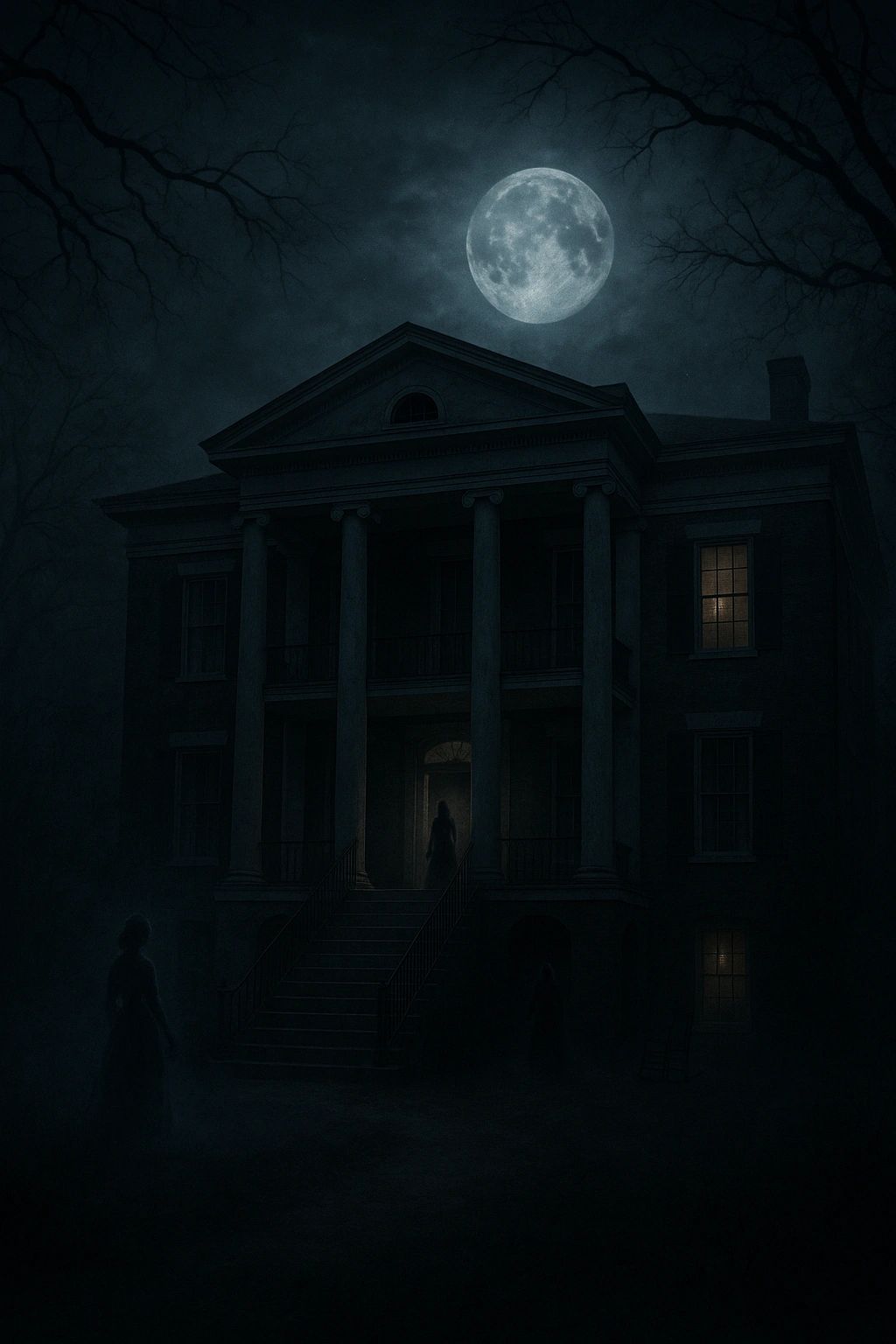
In the heart of Vicksburg, Mississippi—where the whispers of the Civil War still echo through brick-lined streets—stands a mansion whose beauty conceals a dark history. The Duff Green Mansion, with its stately white columns and timeless Greek Revival design, has survived cannon fire, bloodshed, heartbreak, and death. But it has not emerged unscarred. For beneath its elegant facade lingers something unseen—restless spirits of those who never truly left.
They say if you walk the halls late at night, when the air grows still and the Mississippi River hums in the distance, you might hear the faint echo of a child’s laughter. Or perhaps the soft weeping of a woman in mourning. The Duff Green Mansion is no ordinary antebellum home. It is a place where history breathes—and where ghosts remember.
A Mansion Built on Dreams and Southern Grandeur
The mansion’s story begins in 1856, when Duff Green, a prominent cotton broker and socialite, built the home as a wedding gift for his young bride, Mary Lake Green. At the time, Vicksburg was one of the South’s wealthiest river cities, a thriving port along the Mississippi where the rhythm of steamboats and trade defined daily life.
The Greens envisioned their home as a showpiece—a grand estate with towering columns, intricate woodwork, and a ballroom so large it could host the finest parties in the South. The ceilings soared high, chandeliers glittered like starlight, and the grand staircase wound elegantly upward like a silk ribbon.
Locals called it one of the most beautiful homes in Vicksburg, a testament to love, wealth, and Southern prosperity. But within just a few short years, the world around the mansion would change forever.
Vicksburg Under Siege
In 1863, the Civil War brought its fury to the city. Union forces under General Ulysses S. Grant laid siege to Vicksburg, trapping its citizens in a living nightmare that lasted 47 days. Bombs rained down daily. Food ran out. Civilians took refuge in caves dug into the hillsides, trying to escape the shelling that turned their once-grand city into rubble.
Duff and Mary Green, however, refused to flee. Their home became a Confederate hospital, its grand halls transformed into triage wards. The music and laughter that once filled the rooms were replaced by the groans of the wounded and the scent of blood.
The mansion’s ballroom became an operating room, its polished floors stained red. The parlor was lined with cots where soldiers—some little more than boys—lay dying. The sound of saws and the clatter of instruments echoed through the corridors as surgeons worked relentlessly, amputating limbs and performing crude operations by candlelight.
It’s said that Mary Green herself tended to the soldiers, comforting both Confederate and Union men who were brought in after the fighting. The Greens’ compassion was remarkable in such a divided time, and both sides respected their humanitarianism.
But compassion could not stop death from claiming the house.
The Blood That Stained the Floors
The siege left scars—both physical and spiritual—on the mansion. Hundreds of soldiers passed through its doors, and many never left. The basement, with its low ceilings and cool air, served as the surgery and morgue. Limbs were stacked in corners. Blood seeped into the bricks. The cries of the dying echoed through the night.
Even today, guides will tell you that dark stains still mark the basement floor, remnants of that grim chapter. Visitors claim they can feel the heaviness there, a sorrow that clings to the air. Some report cold spots that drift through the room like unseen presences. Others swear they’ve heard faint whispers, or the soft shuffle of boots echoing in the shadows.
Perhaps most chilling are the reports of footsteps descending the basement stairs when no one is there—a soldier returning to his post, perhaps, or a doctor reliving his endless duty.
The Little Girl Who Never Left
Of all the mansion’s spirits, one is said to be especially active—and heartbreakingly innocent.
Visitors and staff alike have reported sightings of a little girl in a white dress, often seen darting around corners or peeking through doorways. She’s playful, sometimes tugging at guests’ clothing or giggling in the halls. Some say they’ve felt her tug on their hand, as if inviting them to play.
According to legend, this young spirit may be Maude Green, the Greens’ daughter, who died in the mansion after falling from the grand staircase. The tragedy shattered the family. Mary Green reportedly never recovered from her daughter’s death, and her grief seemed to seep into the very walls.
Guests who stay in the mansion’s upper rooms have reported hearing the faint patter of small feet, the rustle of skirts, and laughter drifting down the hall at night. One woman awoke to find a child standing by her bed—only for the figure to vanish when she blinked.
Others claim to have felt a sudden, inexplicable warmth, as if a small hand had brushed theirs in the dark.
The Weeping Woman
There are also tales of a woman in mourning, often seen near the staircase or gazing out of the parlor windows. Dressed in 19th-century clothing, her figure is often described as translucent, draped in black, with her head bowed. Some believe this is the ghost of Mary Green, still mourning her daughter—or perhaps the countless soldiers who died under her care.
Guests have heard her soft sobbing late at night, echoing through empty halls. On rare occasions, she’s been seen sitting beside the fireplace, her hands folded in her lap, weeping silently into the darkness.
The staff often say that when the scent of lavender or rosewater fills the air, the Lady of the House is near. Those were Mary’s favorite fragrances, and they seem to linger like a whisper of memory.
Echoes of the Battlefield
The ghosts of soldiers, too, have made their presence known. Apparitions in tattered gray and blue uniforms have been spotted wandering the halls, as if still searching for rest. One guest staying in what was once the sick ward reported waking to find a figure standing at the foot of the bed, watching silently before fading away.
Others have seen shadowy forms crossing the ballroom, heard the clink of metal instruments, or caught the faint strains of a fife and drum—echoes of war that time cannot silence.
During tours, guides sometimes find the rocking chairs in the parlor moving on their own, as if unseen patients or nurses are still keeping watch.
In the basement, EVPs (Electronic Voice Phenomena) have captured what sounds like pleas for help, groans of pain, and even the whisper of the name “Mary.” Paranormal investigators have recorded spikes in electromagnetic energy near the walls once used as surgical tables. One team reported that a shadow figure followed them from room to room, stopping just at the edge of the candlelight.
The Mansion’s Return to Life
After the Civil War, the mansion fell into disrepair. Duff and Mary Green, broken by loss, eventually moved away. The once-grand estate became a hospital for children, then a home for the elderly, and later a boarding house. Each chapter added new layers of human emotion—joy, suffering, love, and despair—imprinting their stories upon the house.
By the mid-20th century, the Duff Green Mansion had become a relic of a bygone era. Its plaster cracked, its floors creaked, and the ghosts seemed to settle in more deeply than ever.
It wasn’t until the 1980s that new life returned. Harry and Lela Howard, enchanted by the mansion’s history, purchased the property and began a painstaking restoration. They restored the architecture, the furnishings, and even uncovered Civil War relics hidden in the walls and floors. In doing so, they revived not only the building’s beauty—but also its energy.
When the Howards opened the mansion as a bed and breakfast, they soon realized that they weren’t the only residents. Guests began reporting paranormal experiences almost immediately—cold drafts, unexplained voices, lights flickering on and off, and the unmistakable feeling of being watched.
Rather than shy away from its haunted reputation, the Duff Green Mansion embraced it. Today, visitors come from all over the world to stay in rooms steeped in history—and haunted by memory.
The Paranormal Investigations
Over the years, the Duff Green Mansion has drawn the attention of ghost hunters, historians, and psychics alike. Several paranormal investigation teams have conducted studies there, using EMF meters, thermal cameras, and voice recorders to communicate with the other side.
One group from Louisiana Paranormal Society reported distinct temperature drops in the ballroom, with sudden spikes of energy near the fireplace. Another investigation captured the phrase “Help me” on an EVP recorder in the basement morgue—an eerie echo from the mansion’s bloody past.
A local psychic once described the home as “a beacon for the lost,” saying its energy draws wandering spirits from the surrounding area. She claimed that while some entities are bound to the mansion by their death, others come seeking the comfort of its warmth, drawn to Mary Green’s lingering presence of compassion.
Some guests report vivid dreams while staying there—visions of Civil War soldiers or the image of a weeping woman at the foot of their bed. Others wake to find impressions on the sheets beside them, as if someone invisible had been sitting there, watching over them through the night.
The Atmosphere of a Living Past
To step into the Duff Green Mansion is to walk into another century. The air feels heavier somehow, charged with memory. The polished banisters gleam, but beneath the shine is history soaked in tears and blood.
During the day, sunlight floods through tall windows, illuminating the ornate furniture and portraits that line the walls. But when night falls, the atmosphere changes. The chandeliers seem to flicker with a life of their own, and the silence grows deep—until it’s broken by something unexpected. A faint knock. A sigh. The creak of a door that no one touched.
Guests who come expecting a typical bed and breakfast often leave with a story they’ll never forget.
One man reported seeing a soldier sitting in the courtyard, his uniform ragged, his expression weary. When he turned to call his wife, the figure was gone. Another visitor awoke to find her quilt pulled up neatly to her chin, though she hadn’t done it herself. “It felt like a mother tucking me in,” she said softly. “I think it was Mary.”
The Legacy of Compassion and Tragedy
What makes the Duff Green Mansion’s hauntings so powerful is not malevolence—but emotion. The spirits here are not said to be vengeful or violent. They are echoes of love, duty, and sorrow, bound to the house by the strength of what they felt in life.
Mary Green’s compassion for the soldiers under her care seems to have left a permanent imprint, a warmth that counterbalances the tragedy. Even the spirits of the soldiers seem peaceful, their haunting more like a lingering patrol than a restless rage.
In a way, the mansion stands as a testament to endurance—to the ability of beauty and grace to survive even the darkest chapters of human history. It is a place where life and death coexist, where memory has refused to fade.
Visiting the Duff Green Mansion Today
Today, the Duff Green Mansion operates as a luxury bed and breakfast, offering visitors the rare chance to sleep in history. Guests can choose rooms that once housed soldiers, doctors, or members of the Green family themselves.
Tours are available for those brave enough to explore the basement—the old surgery and morgue—and learn about the mansion’s Civil War role. Many leave with goosebumps, claiming to have felt a presence brush past or a whisper in their ear.
The current owners take pride in the mansion’s history, both haunted and heroic. They say that though the spirits make themselves known from time to time, they are guardians of the house, protectors of its past.
At night, when the streets of Vicksburg grow quiet and the river breeze carries the faint scent of magnolia through the air, the mansion seems to come alive once more. Shadows move in the candlelight. The creak of a floorboard sounds like a footstep. And if you listen closely, you might hear the soft murmur of voices—echoes of those who lived, died, and linger still.
The Eternal Residents of Duff Green
The Duff Green Mansion stands not as a relic, but as a living memorial—a meeting place between worlds. Its ghosts are reminders that history does not simply rest in the past; it breathes in the walls, whispers in the dark, and sometimes… takes your hand when no one else is there.
In the quiet stillness of midnight, when the moonlight spills through the tall windows, one might imagine Mary Green herself standing by the staircase, watching over her home. Perhaps she still waits for her daughter’s laughter to echo once more. Perhaps she waits for peace that will never fully come.
And maybe, just maybe, she finds comfort knowing that her mansion still stands—beautiful, haunted, and alive with memory.
Bibliography
- National Park Service. Vicksburg National Military Park: The Siege of Vicksburg.
- Duff Green Mansion Official Website. https://www.duffgreenmansion.com
- Mississippi Paranormal Society. Haunted History of Vicksburg.
- Vicksburg Historical Society Archives, “Civil War Hospitals of Vicksburg.”
- Smith, Caroline. Ghosts of Mississippi: Haunted Mansions of the Deep South. Jackson Press, 2018.
- Local Interviews, Vicksburg Historical District (2019).
- Williams, John M. Echoes of the River: Haunted Tales from the Mississippi Delta. River Bend Press, 2020.
About the Author
Rebecca “Madam Chronicler” Ryan is a writer and researcher for The Chronicler Library. She is the co-creator of The Chronicle of Fear and The Waterline Chronicles, and a lead researcher and contributor for The Captain’s War Chronicles and The Captain’s Cellar. Her work blends myth, history, and the natural world with empathy, insight, and intellectual rigor.
Originally published at the live site .